Naples, Palermo, Florence and La Mortola: Italy’s botanic garden cycad collections, with dated figures, outdoor species and practical visiting tips.
Category: cycad
My Sago Palm Is Not Growing New Leaves: 12 Causes, a Diagnostic Decision Tree, and How to Fix Each One
Your Cycas revoluta has been sitting there — same fronds, same size, no sign of a new flush — for months. Maybe a full year. Maybe longer. The internet tells you it is “slow-growing,” and it is. But there is a difference between slow and stalled. This guide walks you through every reason a sago palm stops… Continue reading My Sago Palm Is Not Growing New Leaves: 12 Causes, a Diagnostic Decision Tree, and How to Fix Each One
Magnesium Deficiency in Cycads: Why Old Fronds Turn Yellow and How to Fix It
The oldest ring of fronds on your Cycas revoluta is turning yellow between the veins while the newest flush looks perfectly green. This pattern — chlorosis starting on old leaves, not new ones — points to a mobile-nutrient deficiency. In cycads, the most common culprit is magnesium. It is less dramatic than manganese deficiency (frizzle top) and less discussed than… Continue reading Magnesium Deficiency in Cycads: Why Old Fronds Turn Yellow and How to Fix It
Manganese Deficiency in Cycads: How to Diagnose, Treat and Prevent Frizzle Top
Your Cycas revoluta pushes a new flush of fronds — but instead of the long, straight, deep-green leaflets you expect, the emerging leaves are stunted, crinkled at the tips, streaked with yellow, and visibly deformed. This condition has a name in the horticultural world: frizzle top. Its cause is almost always the same: manganese deficiency. It is the single… Continue reading Manganese Deficiency in Cycads: How to Diagnose, Treat and Prevent Frizzle Top
Best Fertilizer for Cycads: What to Feed Your Sago Palm, When, and How
Cycads are slow growers — but slow does not mean undemanding. A Cycas revoluta that produces a single flush of fronds per year is channeling all its nutritional resources into one concentrated growth event. If the right elements are not available at the right time, the results are immediate and visible: chlorotic fronds, stunted flushes, frizzled leaf… Continue reading Best Fertilizer for Cycads: What to Feed Your Sago Palm, When, and How
Is Sago Palm Toxic to Dogs, Cats & Children? What to Know

Cycas revoluta — universally known as the sago palm — is one of the most popular ornamental plants in subtropical and warm-temperate landscapes worldwide, from Florida to Southern California, the Mediterranean, and coastal Australia. Its architectural silhouette and low-maintenance reputation make it a garden-center staple. But behind that prehistoric elegance lies a serious and widely underestimated… Continue reading Is Sago Palm Toxic to Dogs, Cats & Children? What to Know
Cycas Leaves Turning Yellow? How to Fix Iron Chlorosis with Chelated Iron (EDDHA)
Your Cycas is pushing a new flush of leaves — but instead of the deep, glossy green you expected, the fronds emerge pale yellow with only the midribs retaining a faint green. This textbook pattern has a name: iron chlorosis. Widespread wherever cycads meet alkaline soil or hard tap water, this nutrient disorder is entirely correctable — provided… Continue reading Cycas Leaves Turning Yellow? How to Fix Iron Chlorosis with Chelated Iron (EDDHA)
Cycad Aulacaspis Scale (Aulacaspis yasumatsui): Identification, Treatment and Prevention
If you grow cycads — and especially if you grow Cycas revoluta, the king sago palm — you need to know about Aulacaspis yasumatsui. This tiny armoured scale insect, barely the size of a pinhead, is the most destructive pest of cycads worldwide. It has killed entire populations of Cycas revoluta in cultivation. It has forced botanical gardens to… Continue reading Cycad Aulacaspis Scale (Aulacaspis yasumatsui): Identification, Treatment and Prevention
My Cycas Is Producing New Shoots
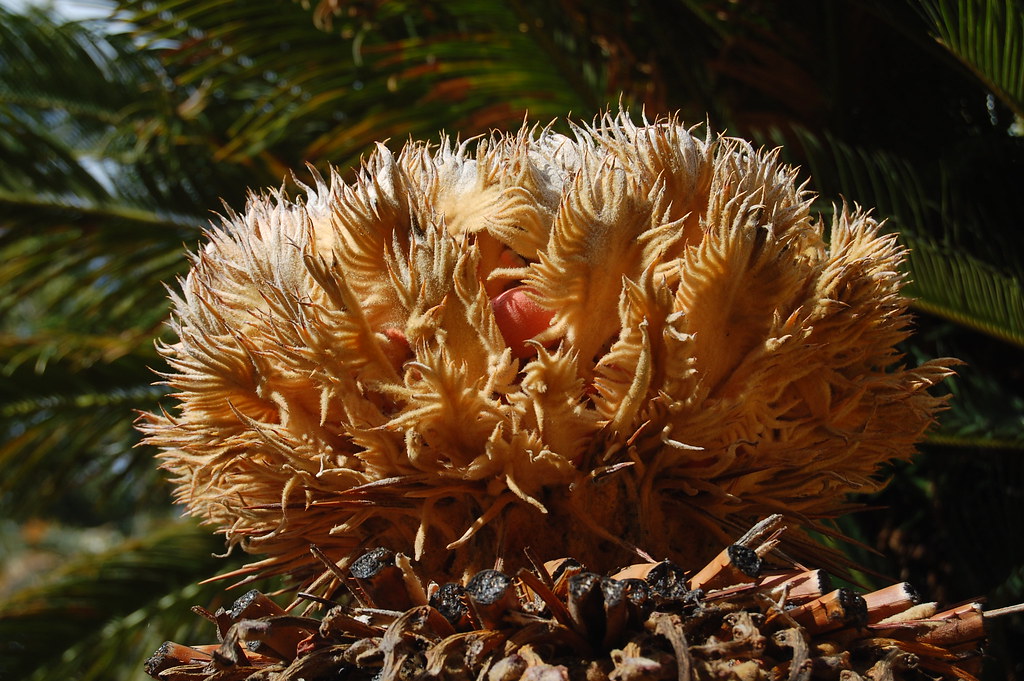
You notice a cluster of new growth emerging from the centre of your Cycas revoluta — and you’re not quite sure whether to celebrate or worry. That sudden flush of tightly coiled fronds, or a strange compact structure rising from the crown, can look alarming if you’ve never seen it before. In reality, it is… Continue reading My Cycas Is Producing New Shoots
The Simon Lavaud Method: Grafting Cycads onto Cycas revoluta to Grow Difficult Species
There is a group of cycads that every collector covets but almost no one in Europe or temperate North America can grow well. The Australian blue cycads — Cycas couttsiana, Cycas ophiolitica, Cycas cairnsiana — along with tropical Asian species like Cycas siamensis “Silver”, are among the most beautiful plants in the genus Cycas. On their own roots, in a European… Continue reading The Simon Lavaud Method: Grafting Cycads onto Cycas revoluta to Grow Difficult Species